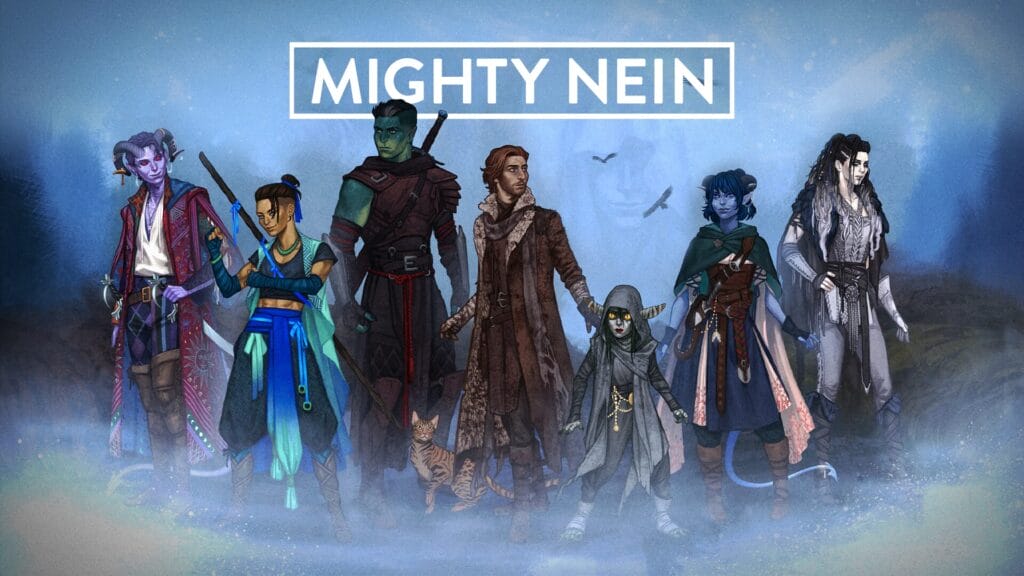
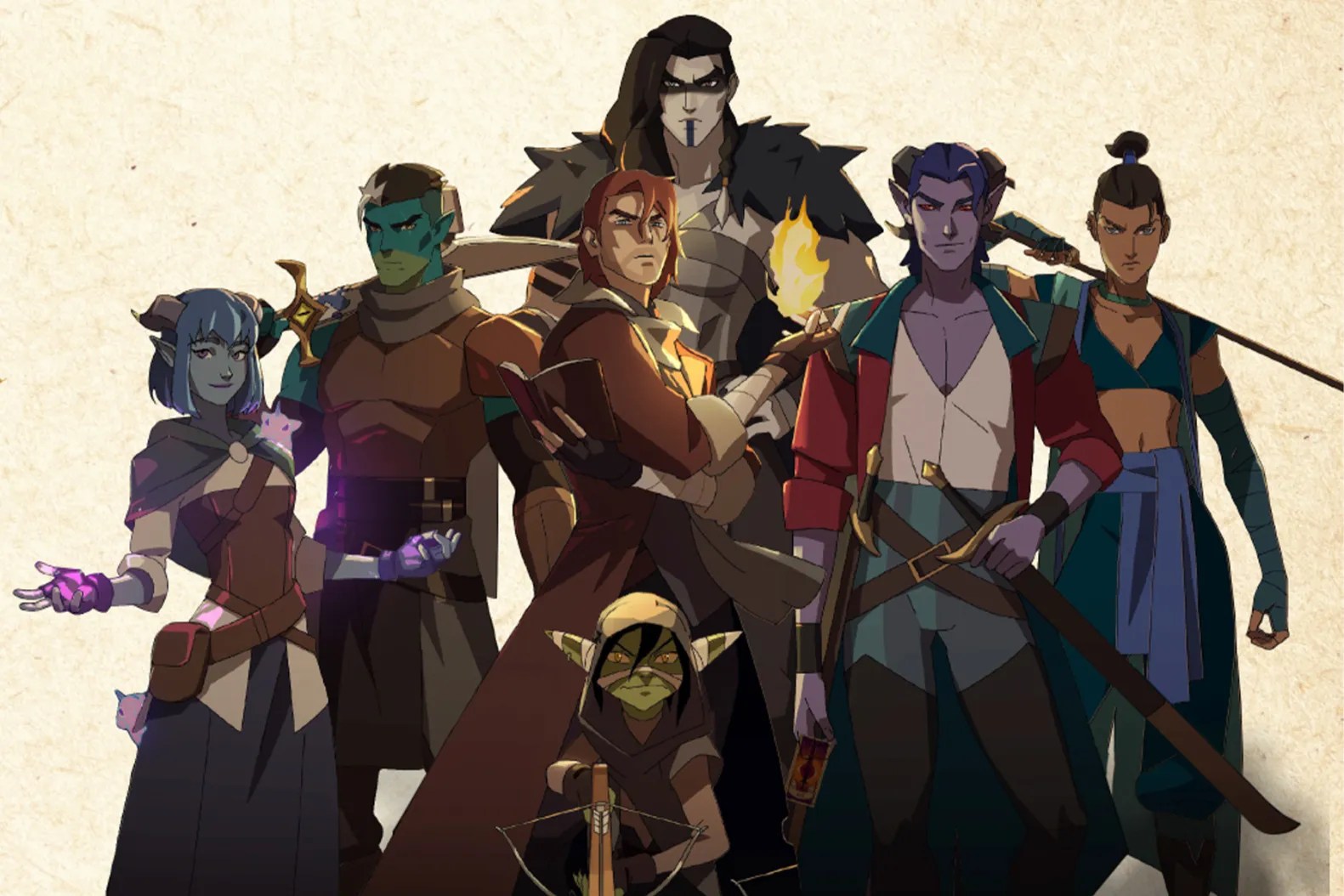
Spoilers for the first thirteen episodes of Campaign 2 and Season 1 of The Mighty Nein, including changes between the two. Major reveals from the Campaign will be avoided, though!
- I. Introduction
- II. Lore Drop
- III. “Fragment of Possibility”
- IV. “Mote of Possibility”
- V. Who Will You Be?
I. Introduction
“Anybody can make lights.
Anybody could send a message through a wire.
I want to bend reality to my will.“
Caleb Widogast, Whispers of War, 2×18
The Mighty Nein is my favorite streamed D&D campaign. With the release of the animated series, I’ve started thinking about what makes a good adaptation. There isn’t a hard-and-fast rule or rubric to help grade the effectiveness of an adaptation. Usually, the answer is, “I know it when I see it.”
Our media is saturated with adaptations from the famous Lord of the Rings to the infamous Percy Jackson movies. One is considered the pinnacle of a good adaptation, while the other is whispered about like a deeply offensive memory because of significant differences between the source material and the adaptation. However, that doesn’t mean that big changes are indicative of a poor adaptation. For example,Captain America: The Winter Soldier takes considerable liberties with the source material, yet it is lauded as a good adaptation even by fans of the original comics. I’ve heard the phrase “it’s faithful to the original” as the go-to when describing a good adaptation, but what does that even mean? Something I’ve noticed over the years is that you can hit every major plot point and dress the actors perfectly, but it can still be a poor adaptation.
The majority of feedback I’ve seen online about the animated series The Mighty Nein has been positive. Most of the negative reviews I see argue that the show changes too many aspects of the Campaign: Caleb’s spells are too powerful, Beau is too smart, Mollymauk didn’t say that, why isn’t Jester using Thaumaturgy to open every window, and where is Shakaste?!
The show both expands and loosely covers half of the events of the first arc (roughly campaign episodes one through 13). The major plot points stay the same, but the wheres and whos involved change.
For reference, here’s a super quick rundown of the main plot threads and what the show changed:1
II. Lore Drop
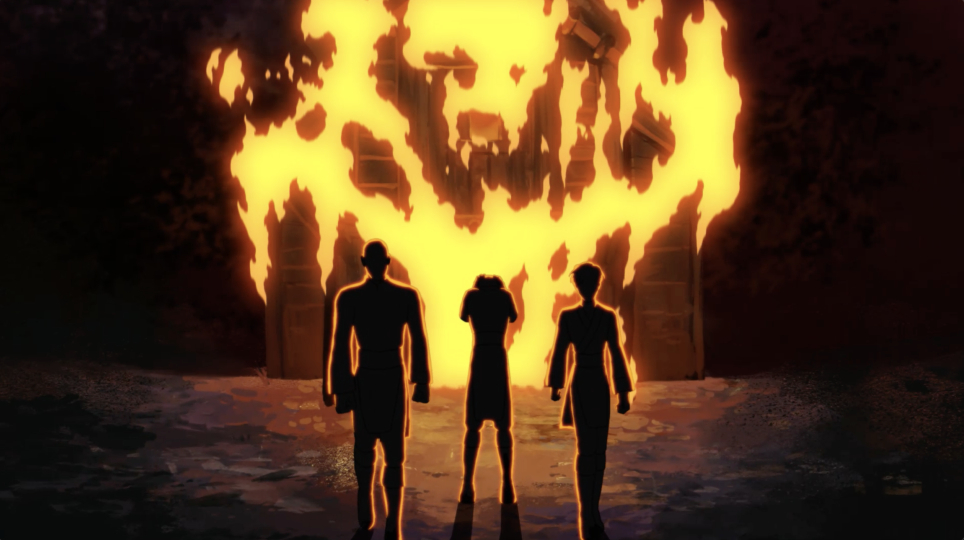
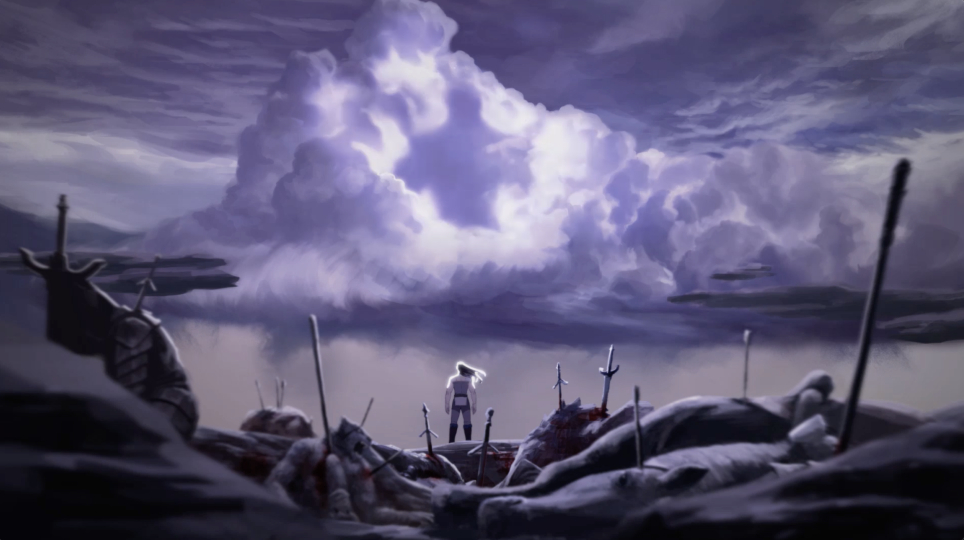
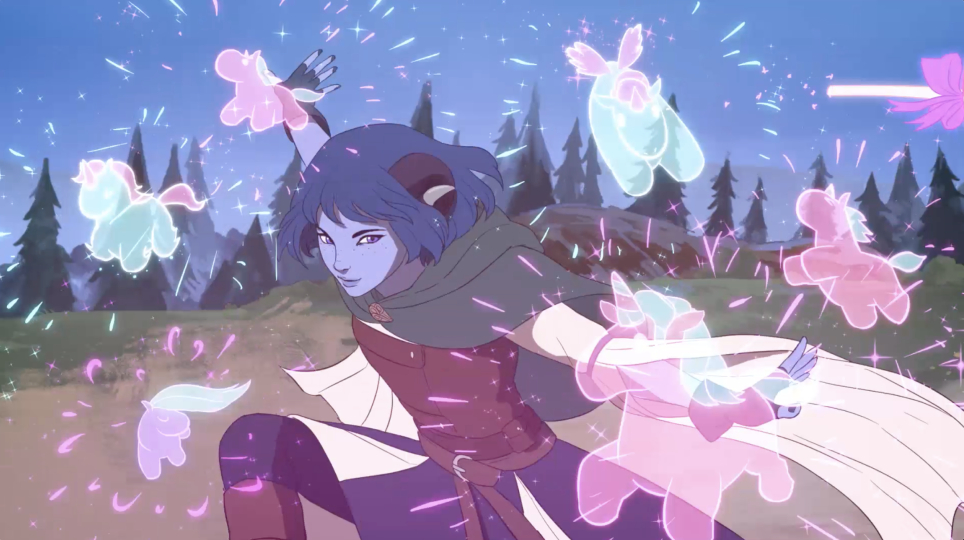
Major Plot Points:
- The Nein come together in Trostenwald after fighting the Devil Toad.
- The Nein arrive in Zadash.
- They begin working for the Gentleman.
- They obtain the beacon and learn about some of its significance.
- Trent Ikithon is set up as a villain (more so in the show than the original Campaign, but it is hinted at).
Relevant Lore:
- The Cerberus Assembly, Trent Ikithon, and the Volstrucker Agents
- Vess DeRogna and her involvement with Mollymauk
- “The Nonagon” and the book
- The Cobalt Soul/Expositors
- Locations (Kryn Dynasty and Dwendalian Empire)
Major Changes:
- The Campaign didn’t start with the theft of the beacon and it wasn’t introduced until Zadash.
- Essek wasn’t introduced until much later. His betrayal wasn’t uncovered until later, either.
- The Campaign starts at a tavern in Trostenwald. We do not see the initial meetings of the different groups.
- Before the group formed, the cast was split into three different groups for their session 0 or pre-stream games to establish their characters. Originally, Beau was with Fjord and Jester’s group. Yasha was with Mollymauk and working in the carnival.
- In the Campaign, Beau, Fjord, and Jester are heading to the Soltryce Academy. Fjord hopes to go there to learn more about his magic. After the events of the carnival are resolved, they invite Molly, Yasha, Caleb, and Nott to travel with them, and they agree to join.
- Gustav does not die during the battle at the carnival, but he is arrested along with the rest of the group by the Crownsguard.
- The Devil Toad, Kylre, had a deal with Gustav. He would make the carnival better, but in return, Gustav would have to give him people to eat. Gustav was reluctant, but agreed to provide him with the sick and elderly after each show. Something went wrong, though, and Kylre drained someone during a show, turning that person into an undead. Kylre fled with Toya to protect her. In the Campaign version of events, Toya doesn’t die.
- Archivist Zeenoth and Dairon are introduced differently in the Campaign vs. the show. In the Campaign, Zeenoth is brought to Trostenwald to examine the Devil Toad’s corpse. Beau hides her face from him and tries to slip away, but returns to the group when a hooded figure stops her. We find out later in that episode that Zeenoth had called in a favor to find Beau and wants to bring her back to the Valley Archive. Dairon takes over as Beau’s mentor and dismisses Zeenoth. They explain that they’re an Expositor before offering to teach Beau. They end up using Zeenoth as a punching bag. This feels relevant to add. The tension with the Cobalt Soul is initially less about internal betrayal, and more about how Beau’s agency was taken from her after she was forced to join and how she rebuilds trust with the help of Dairon.
- The encounter with the gnolls on the way to Zadash is removed.
- In Zadash, the city’s factions play a larger role. They meet with a group of rebels called the Knights of Requital. The rebels share ways the Dwendalian Empire has harmed them, specifically noting that they were mistreated by the Crownsguard and that the Empire has worsened social issues for the average citizen. There’s talk between the Nein of turning the group in to the Crownsguard for a reward, but Caleb opposes it and supports the rebels.
- This is, in my opinion, the biggest change: the group gets the beacon by accident. The same night that the beacon is stolen from the Zauber Spire, the Mighty Nein are working a job for the Knights of Requital. They’re able to use the distraction caused by the attack on the spire to escape from the High Richter’s house. The group flees into the sewers and finds one of the attackers. The drow is wounded and carrying what the group perceives as a glowing dodecahedron. They fight him, and after knocking him out, they steal his armor, money, and the strange artifact. Molly uses Charm Person to interrogate the drow, Thuron. They learn that the Dwendalian Empire stole the beacon from the Dynasty and that the beacon is vital to the Dynasty’s survival. They decide to let Thuron go, but unfortunately, the already beaten-up NPC is killed shortly after. The Nein recover the beacon and successfully sneak away.
III. “Fragment of Possibility”
“[Dunamis] has the capability of altering time, space, probability, entropy.”
Caleb Widogast, Red Moon Rising, 3×50
Campaign two introduced two new schools of magic and a fighter subclass to Exandria that use Dunamancy: Chronurgist, Graviturgist, and Echo Knight.2 Most of these are self-explanatory based on the names (Echo Knight being the exception and in a way the biggest hint), but how does Dunamancy connect them? The spell list and class sub-features would suggest that the magic is about warping reality, but when you look at the root of the word, “dunamis,” it’s revealed that this school is more nebulous. According to the sacred texts of Wikipedia, “dunamis is a Greek philosophical concept meaning “power”, “potential” or “ability”, and is central to the Aristotelian idea of potentiality and actuality.”3
What better way to describe the adventures to be had in Dungeons and Dragons as anything other than potential?
This theme of potential is highlighted in the open exposition about the Luxon beacon, where we see flashes of potential pasts, presents, and futures. It implies that nothing is ever set in stone, not even time or our choices.
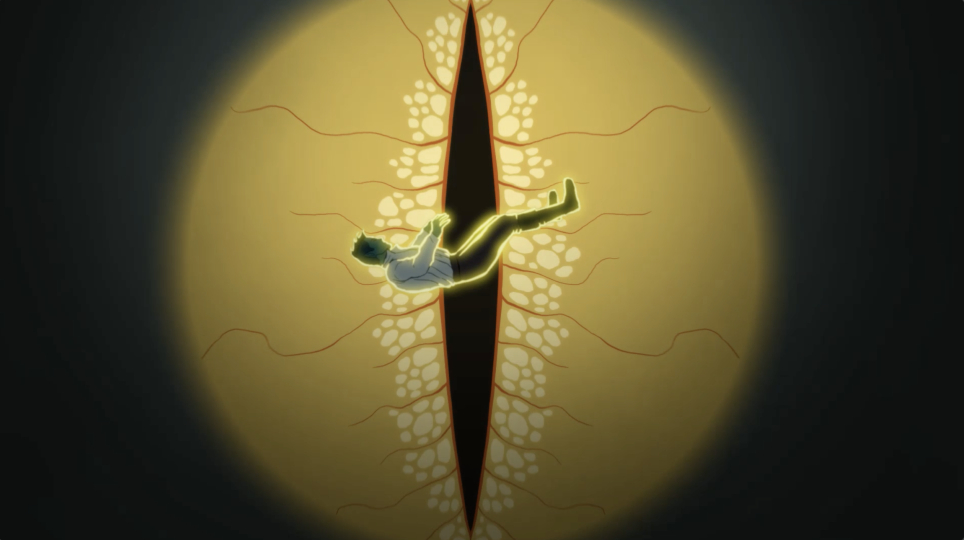
In the Campaign, the Nein have a soft introduction to this when Caleb delves into the beacon with his consciousness, which eventually reveals to him a small, glowing mote that pulses like the beacon’s heartbeat. I’ll keep this part brief to avoid future spoilers, but essentially, Caleb is able to touch the mote, and when he returns to himself, it stays with him as a Fragment of Possibility.
With this beacon, the Nein are given a choice, one that’s echoed so many times in the show, from names of episodes and Mollymauk’s speeches to the song that the Ruby of the Sea sings: Who will you be?
Following the events of the Devil Toad and coming together as a group, the Nein are all given a chance to reinvent themselves, to be something new.
Furthermore, this thematic throughline–this Mote of Possibility–was incorporated into the actual construction of the adaptation.
IV. “Mote of Possibility”
“You’ve got two alternate reality versions of the same thing, and it’s still a joy to go back and see all of those moments that exist as they did before in the campaign.”
Liam O’Brien
The thing about Dungeons and Dragons, is that no matter how much a dungeon master or a player wants to tell a specific tale, the dice will always tell the true story. This can lead to spectacular moments, such as a nat 20 rolled at a critical (hah) moment, changing the trajectory of combat. It can also lead to hilarious moments, like Fjord getting three nat 1s in a row while playing a festival game (there’s a nod to this in the show with the hammer carnival game that Fjord and Jester play) or the infamous polymorphed turtle incident.4 However, failed skill checks often lead to missed information and opportunities, which while fine during a game, wouldn’t necessarily always translate well to a show.
Dice rolls are just one aspect that directors and scriptwriters need to account for when adapting a campaign into a more easily consumed medium. There’s also player agency and player attendance.
It’s in the nature of a D&D party to meander while chasing different plot hooks and being a menace to society and the DM. These moments are fun for the audience and the players, but ultimately slow down the story and its pacing.
Campaign Two also had quite a few player absences and real world complications that required the cast to pivot or adjust mid-campaign. This included things like Ashley Johnson’s (Yasha) filming schedule, Laura Bailey (Jester) and Travis Willingham’s (Fjord) pregnancy, and the pandemic. One way the cast worked around these absences was to invite other friends and voice actors to temporarily join the campaign. They also had pre-planned side quests and encounters to not-so-subtly temporarily remove characters from the party. These moments were fun during the live watches, but as with the dice rolls, they don’t always translate well into other mediums.
Critical Role used their own Mote of Possibility to make changes to the campaign when they adapted it into a series. During the Inside the Mighty Nein: Premiere Cocktail Party | Livestream, the cast answered a question about how “certain things were changed or economized.”5 Marisha Ray (Beau) noted that, “just because something doesn’t show up in the order it did in the campaign doesn’t mean it’s not going to show up ever. I feel like, if anything, the thing that we had to truncate or economize the most was just the chronological order of things so that the new audience could understand what the fwuaaak was going on.”6 Following her explanation, Taliesin Jaffe (Mollymauk) continued that, “storytelling on television is kineticism7 […] you can’t go off on a tangent. There’s no room for things that aren’t going to pay off […] People keep going “why did Gustav die?” And it was like, because we’re never going to see him again. […] The things that you cut off of that streamline are the things that don’t serve it at any point.” Liam O’Brien (Caleb) wrapped it up by saying, “You’ve got two alternate reality versions of the same thing, and it’s still a joy to go back and see all of those moments that exist as they did before in the campaign.”
Did it work, though? Were they able to make a faithful adaptation that audiences new and old were able to follow and enjoy?
Anecdotally, I’d say they did, since the show is surpassing its original audience and attracting new viewers. I have friends who never watched the campaign who enjoyed the show. When I watched it with them, I felt like I had little kernels of secret knowledge about those motes of possibility that shifted between the two realities of Campaign and Show. I was surprised by the shifting threads and delighted by the payoffs and nods made specifically for the original viewers. The pacing and story beats were vastly improved from the original (as much as I love listening to 4-hour-long episodes, it’s not always feasible to keep up — and this isn’t to say the original was bad; it’s just a different medium). Changes to the characters and stories also made sense and felt overall like an improvement. Gustav and Toya’s inclusion and subsequent deaths added meaning, depth, and stakes to the show. The lingering shadow of Yasha’s presence haunting the narrative, ominous and hunting, only to immediately change when contacting the beacon, strengthened the core theme of the season (potential and possibility). Some might argue that the animation simplified the character designs too much, but as an artist and a friend of animators, this choice didn’t bother me (I couldn’t imagine trying to animate Mollymauk’s original design).
Critically, looking at reviews, The Mighty Nein had an overall positive reception. On Amazon Prime where it’s hosted, the show has a 4.8 out of 5 stars with 92% of viewers giving it 5 stars.8 Rotten Tomatoes gives it a critics score of 100% and an audience score of 90%.9 IMDB rates it at 8.5/10.10 Polygon’s Aimee Hart wrote a review that does a good job summarizing the reasons behind the show’s success. Hart noted how Critical Role took the lessons of The Legend of Vox Machina “to heart” when adapting its second series. Hart then explained, “unlike with Vox Machina, Critical Role has taken a far more measured approach in setting up the building blocks of the world of Exandria in The Mighty Nein. We know enough about the world, the interplay of politics and fractured communities, and even how magic is used by different individuals, to make it feel narratively and tonally compelling and cohesive.”11
V. Who Will You Be?
The Mighty Nein exists in two realities — two potential possibilities the creators wove into two satisfying stories. I like to look at them like the Lord of the Rings trilogy: there’s the theatrical release and the extended version. Both serve a different purpose, and some audiences will enjoy both, one, or neither.
As an adaptation, the Mighty Nein succeeds because it acknowledges the strengths and limitations of the new medium. Tonally, it mirrors the source material, but allows itself to forge its own identity separate from the original. It’s effective at acknowledging the project’s scope and sifting through the source material to distill it to its most essential plot beats. However, it’s careful not to lose its essence through this transmutation. The characters, setting, and core emotional throughline remain.
Rather than believing that the story of the Mighty Nein was set in stone, Critical Role looked at their work and asked, “Who would you like to be today?”
- (spoilers) https://criticalrole.fandom.com/wiki/Campaign_Two:_The_Mighty_Nein#Story_arc_summaries ↩︎
- https://criticalrole.fandom.com/wiki/Dunamancy ↩︎
- https://en.wikipedia.org/wiki/Dunamis_(disambiguation) ↩︎
- (spoilers) https://www.youtube.com/watch?v=EhLjxxa6wL4 , https://www.youtube.com/watch?v=kCPrD-8Hj_o ↩︎
- https://www.youtube.com/live/RiI_APSGw8U?si=g4L1SRVSoNov5Xx_&t=6028 ↩︎
- Marisha drew out the word “fuck” here. I adjusted the quote accordingly to achieve this affect. ↩︎
- This was a fun new word for me so I thought it would be fun to add it here. According to the sacred texts of Wikipedia, Kineticism is energetic movement, particularly applied to any visual arts. https://en.wiktionary.org/wiki/kineticism ↩︎
- https://www.amazon.com/gp/video/detail/B0FQM934V8/ref=atv_dp_share_cu_r ↩︎
- https://www.rottentomatoes.com/tv/the_mighty_nein/s01 ↩︎
- https://www.imdb.com/title/tt26453092/ ↩︎
- https://www.polygon.com/mighty-nein-finale-review-vs-legend-of-vox-machina/ ↩︎
 Eirror404 Creates
Leave a comment